Showing posts with label world heritage. Show all posts

July 15, 2014

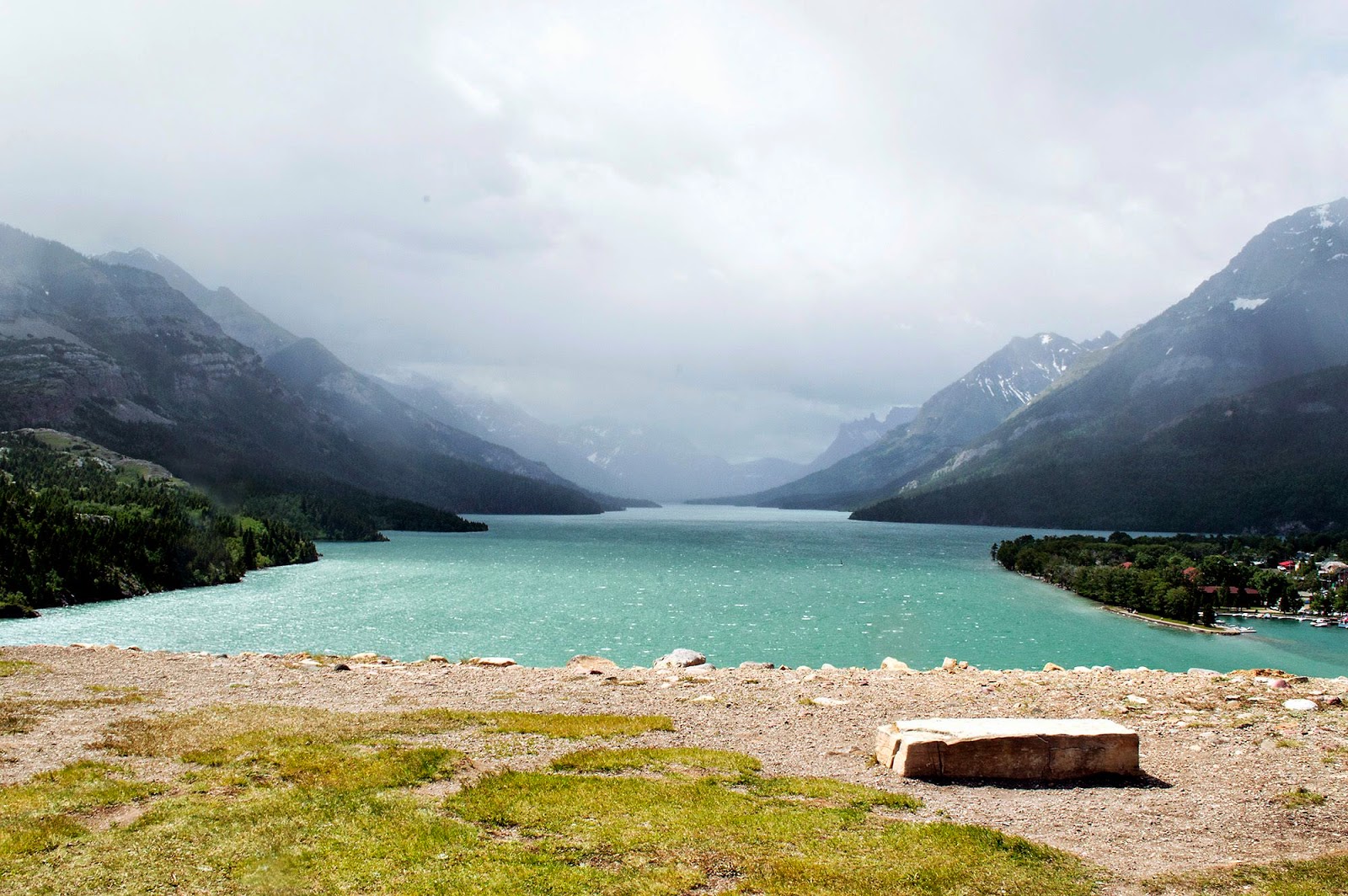
Enamored with Waterton Lakes National Park

Tuesday, July 15, 2014 Posted by Mary , , , 4 comments


There has been one thing that's influencing my travel decisions for the past few years: the item on my bucket list that requires me to visit 50 UNESCO World Heritage Sites. This interest started around 10 years ago when I was an exchange student in Japan. We'd visited a number of these sites then, and I was intrigued by their how special they were. Thankfully, my husband fully supports me in this quest, and because of it, I have discovered a new favorite--Waterton Lakes National Park.

Waterton is a Canadian national park in the southwest corner of Alberta, just a few kilometers from the US border. In fact, along with Glacier National Park in Montana, USA it forms the Waterton-Glacier International Peace Park, a UNESCO World Heritage Site designated in 1995 because of its distinctive climate, physiographic setting, mountain-prairie interface, and tri-ocean hydrographical divide. It is an area of significant scenic values with abundant and diverse flora and fauna.

Waterton is quite a long drive from Red Deer. Four and a half hours, to be exact, so we spent the night at Pincher Creek before going to Waterton. It is its closest city, just around 40 minutes from the park. In hindsight, that might have been a bad decision. We should have just driven directly to Waterton and spent the night there. It would have given us more time to enjoy the place. Still, the day that we spent at the park was nothing short of amazing.


There are many breathtaking parks in Alberta, but Waterton is special because its centerpiece, the magnificent Upper Waterton Lake is right there--right by Waterton village. You don't have to drive away from the town to enjoy its splendour. And because of the park's distance to the big cities, it is also not as busy as the other parks in the province. You can enjoy the area in relative peace.


Another highlight of the park is the Prince of Wales Hotel. It was constructed between 1926 and 1927, and named after the Prince of Wales who later became King Edward VII. It is a massive Swiss-chalet style building, oozing with charm and character. The best part: it has a parlour with an amazing view of the lake.


We were also able to visit Red Rock Canyon while at Waterton. A 16-km drive from the town, it is a must-see because of it's gorgeous red and green bedrock layers. If you like hiking, or wildlife, this is the place to be. We didn't see any bears that time, but there are many of them around this area.

We capped our tour of Waterton with a meal at the posh Bayshore Lakeside Chophouse. It was wonderful to be able to dine and relax right beside the lake. I had Braised Short Ribs. It was tender, succulent, and perfect.

It is not very often that I want to go back to a place I've only very recently visited. But I do wanna go back to Waterton. It is truly breathtaking. I could probably live there forever. For a self-described city girl like me, that's saying something.

October 3, 2013

Moraine Lake

Thursday, October 03, 2013 Posted by Mary , , , , No comments

If you google images of Canada, there's a popular picture that is sure to grab your attention. In fact, if you do that right now, I'm 100% positive your eyes will hone in on a picture of a lake, with trees around it, and with the Rocky Mountains in the background.

That, my friends, is Moraine Lake at the Banff National Park, a UNESCO World Heritage Site and the oldest national park in Canada, right here in Alberta. That image, because of its astonishing beauty, has haunted me for years, even before I knew I was coming to Canada, even before I knew I was marrying a Canadian. A few weeks ago, after being in the country for 8 months, I was finally able to behold it with my own eyes.

It's funny because my husband didn't even know Moraine Lake existed. But I insisted, and googled, and thankfully, GPS led us there. Although still inside Banff National Park boundaries, it's actually not anywhere near the Banff town center, but some 60 km away in the town of Lake Louise (74 km if you consider the drive up to the lake itself). It was almost sunset when we drove there, and I was freaking out, because we were in a narrow, winding mountain road in the middle of nowhere and we didn't exactly know where we were going. When we arrived at the lake area though, I was relieved to see a lot of people, and when I saw the lake itself, I actually had tears come to my eyes.

Moraine Lake was breathtaking! It was every bit as beautiful as in the pictures, maybe even more so. And it was very humbling, actually being there, a place I never imagined I would be able to visit...

It was definitely a dream come true.

September 4, 2010

Finding Heritage

Saturday, September 04, 2010 Posted by Mary , 4 comments


A UNESCO World Heritage Site is a place (such as a forest, mountain, lake, desert, monument, building, complex, or city) that is listed by UNESCO as of special cultural or physical significance. The list is maintained by the international World Heritage Programme administered by the UNESCO World Heritage Committee. I think these sites are really special, as they are carefully selected for their significance to humanity. So on my bucket list, I have a goal to visit at least fifty UNESCO World Heritage sites. I've only visited a few (thanks to my stay in Japan), but that is only the beginning. Today is the start of my journey to finding heritage.


UNESCO World Heritage Sites Visited
  1. Hiroshima Peace Memorial (Genbaku Dome)
  2. Itsukushima Shinto Shrine
  3. Gusuku Sites and Related Properties of the Kingdom of Ryukyu 
  4. Canadian Rocky Mountain Parks (Banff National Park)
  5. Waterton Glacier International Peace Park
  6. Head-Smashed-In Buffalo Jump

February 15, 2004

Okinawa

Sunday, February 15, 2004 Posted by Mary , , , No comments
So we were in Okinawa starting from Monday till Thursday this week. It was our second and last study tour from Ferris, like the one we had in Hiroshima and Okayama last year. For those souls reading this and don't know where or what Okinawa is, it's a group of islands in the south of Japan, about 1,550 kilometers away from Tokyo, and is actually nearer to Manila than it is to the Japanese capital. It houses a gazillion US Military installations and was home to a horrible battle during the Second World War.

Naha International Airport

Anyway, we left Tokyo HANEDA Airport on an Air Nippol--oops Nippon, I mean--Airways Boeing-747 and since the weather was really bad in Naha (the capital city of Okinawa prefecture), our flight took longer than usual. Thankfully, we landed (safely). The moment I set eyes on Naha though, I loved it immediately! The Naha Airport (both domestic and international) itself was so pretty! The buildings were fairly new, painted in white (I love white!), and adorned with pretty cattleya orchids right from the tube you use to disembark from the plane and all over the lobbies! It's my mom who loves orchids, and not me, but these pretty things which reminded me so much of home (our yard to be exact) had a profound effect on me. (Awww shucks!) In fairness, they were really pretty though. They had all these flowers, and the sheer abundance of them totally impressed me. The leaves were so green (not yellowish at all) that it was obvious they were really taken care of properly.


 Cattleya Orchids

So after that, we boarded a nasty bus which smelled soo much of stale smoke it made me sick. Our first stop was for a viewing deck for the Kadena Air Base, the largest Air Force base not only in Japan, but in the Far East. My first reaction to this was disappointment. I thought we were going inside the bases! *buhuhuhu* I really thought that since this was such a proper, educational field trip, they'd arrange for us to be able to get inside. But that wasn't the case. Being an airplane nut, I really wanted to see the planes (as I told Annie, the movie Top Gun had a very big effect on me heh heh), and of course, you know, everything else. Hehehehe. Anyways, we saw the sprawling base and the planes from afar and took pictures of them in which they were sooo teeny.

 Kadena Air Base

The best thing about the tour was the posh hotel we stayed in during the first two nights. The lobby was pretty, the rooms were nice, there was a huge Japanese-style bath and onsen (hot spring), there was a gaming place, pretty shops where I bought a cutie bag from, and a really beautiful beach! There was also a large pool outside, but since it was still rather cold to be swimming, they drained the water out of it. We had our breakfasts and dinners at the hotel too, and that was good. So much food around! LOL.

The next day we went to more historical places, and to the remnants of an old Ryukyu castle. The Ryukyus formerly ruled Okinawa, before the were made a part of Japan in the 1870's. We also went to some sort of park place, with booths about Okinawa's Ryukyu culture. That's where Annie and I had a picture of ourselves taken in Okinawan costume, which is different from the Japanese kimono.

World Heritage marker
The third day was the most remarkable day of the trip. First we went to another US installation, the Futenma Air Station, which is right in the middle of the town of Futenma. And then we went inside a limestone cave which the Japanese turned into a hospital during the Battle of Okinawa in World War II. It was absolutely unbelievable how they turned that into a hospital. The cave was underground and its alleys were very small, although they said the cave itself was more than 200 meters long. You could barely stand straight, and it was so slippery because of the water which trickled everywhere. We were bringing flashlights, and when went deep inside the cave, they made us turn our lights off, and it was so dark we couldn't see anything. I put my hand right infront of my face and I still couldn't see it! That was how dark it was. Not even a tiny ray of light was leaking in from the surface.

When we were still making our way inside, I didn't really realize how they used that cave during the war. You just get so preoccupied with not slipping or not hitting your head on the ceiling, but after that visit to the cave, we went to a museum about the Battle of Okinawa, and when we read the testimonials of the survivors, that's when I realized how horrible it was. They had all these stories about how high school students were deployed as nurses and worked inside the caves (all the caves in Okinawa were made into hospitals), how demanding the injured Japanese soldiers would be, how gross the injuries were, and just how absolutely horrible everything was.

Then we went to a bigger museum, the Okinawa Prefectural Peace Memorial Musuem. It was pretty, beside the beach, and the building was beautiful. It wasn't as sad as the previous one we visited because I didn't get to read any testimonials, but it was very informative and showed the entire history of Okinawa: when it was still the Kingdom of the Ryukyus, before the war, during the war, and during the American occupation. Outside, they also had these blocks of cement which had the names of everyone who died in the Battle of Okinawa which lasted roughly round 3 months. They also had the names of American soldiers there, and our guide said that there were also names of Filipino soldiers fighting alongside the Americans who were listed there, together with the names of the American soldiers who died.

 Okinawa Prefectural Peace Memorial Museum

The Cornerstone of Peace, where the names of the people who died in the Battle of Okinawa are inscribed.

On the last day of our stay in Okinawa, we went to the Shuri Castle Park, which was the main castle during the reign of the Ryukyus. It was very pretty, and showed how magnificent the old kingdom was. You'd really think that it was a shame they didn't have the chance to stay sovereign.

 The Shuri Castle

I told Annie that I was finding it really hard to be talking about war-related stuff when I was in the country who bombed and enslaved my own, but then I realized that Japan is not the same country it was. It has good relationships with the US now, and is trying to make up for the things it has done in the past. I'm also glad that they have all these museums here, which are very informative and objective. I used to think that it was to show the people how mean the enemies were, but that's not true. They're just there to remind everyone how devastating war can be and how it should be avoided at all costs.

October 20, 2003

Hiroshima Report

Monday, October 20, 2003 Posted by Mary , , , No comments
Genbaku Dome (Atomic Bomb Dome) - Ground zero of the Hiroshima bombing


So here's my report about Hiroshima, I decided to post it here. I submitted this last night to the people at Ferris, coz they're gonna make a document with all the reports of the people who went on that trip.


There are things in the world we take heed of, yet sometimes there are certain instances where matters of great importance are just neglected.

Before I came to Japan, I only had very basic knowledge about the atomic bombings of Hiroshima and Nagasaki. Yes, I learned that a lot of people died, properties were damaged, and horrible aftereffects of harmful radiation were manifested immediately and even decades after the attack. However, for a catastrophy which did not even happen in my lifetime, and which took place in a country relatively far from my own, it is hard to imagine the real extent of the damage, and even much harder to feel the anguish victims might have felt on such a tragic event.

The moment we arrived in Hiroshima during the Japan Study Tour, we immediately went to Peace Memorial Park. The first thing we saw was the Atomic Bomb Dome, formerly the Hiroshima Prefectural Commercial Exhibition Hall, standing ruined but proud more than half a century after the attack. That was my first glimpse on reality about the Hiroshima bombing, and I realized that the horrendous attack was not something to be taken lightly. It must have taken a very powerful blast for a strong structure such as the Exhibition Hall to be damaged so much, and I could not stop thinking that if buildings like that were damaged, then the damage to human life must have been unthinkable. It was there that I learned, upon reading an inscription near the building, that around 300,000 people were killed because of the attack. That number is indeed unimaginable.

We went around the park, exploring monuments which served as memorials for the unfortunate victims. There were monuments for children, teachers, soldiers, and students, among others. These people led different lives, and had different hopes and ambitions, but they all shared the same fate as they fell victim to the bomb on that fatal day of August 6, 1945.

When we entered the Hiroshima Peace Memorial Museum, it was there that I fully understood the extent of the damage. The museum was amazing. The displayed pictures of Hiroshima before the attack made me think that it was so sad for such a bustling, developing city to have been reduced to dust. The miniature before-and-after models of the city were so in contrast that they totally shocked me. Such a big part of the city was damaged, and so many lives were lost. For me, the most heart-wrenching articles in the museum were the things left behind by the victims which were discovered by their loved ones later, and the sad stories and poems I listened to on the recorded audio guide I was using. Looking at the remnants of the attack, hearing the poems and stories, and seeing the pictures of the victims were extremely heart-breaking. There were even some instances when I almost cried.

In the course of the history of mankind, different nations and individuals have done numerous horrible deeds. The making and using of nuclear bombs is certainly one of these. Because of war, acts like these are oftentimes justified. But no matter how much a nation wants to defeat the enemy, and no matter how reasonable they might claim the intention to be, great efforts should be done for the loss of innocent human lives to be minimized. It goes without saying that weapons of mass destruction should be wiped out from the face of the earth.

In so many places around the world, people are ignorant to the existence of these killer weapons and the harm they could do to the human race. The city of Hiroshima is like a shining light in the battle for peace and nuclear abolition. I can say that I am truly lucky to have been given the chance to visit the city, for because of that, I have become aware, and now I can make my own little efforts in the pursuit of world peace.